
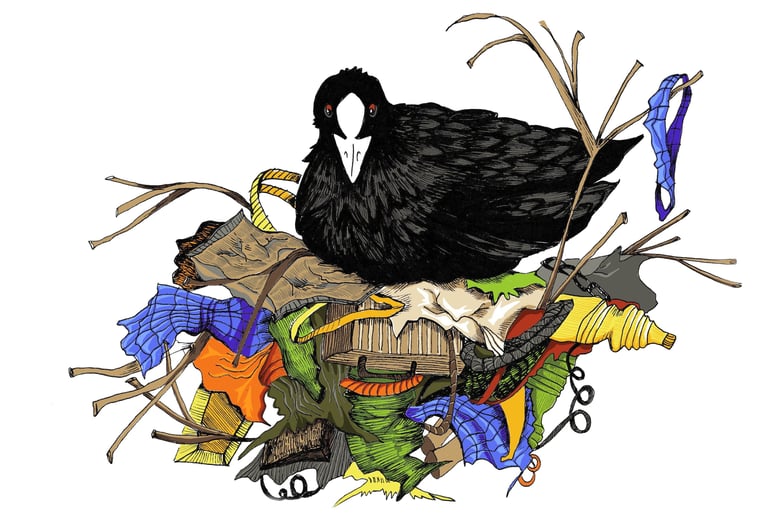

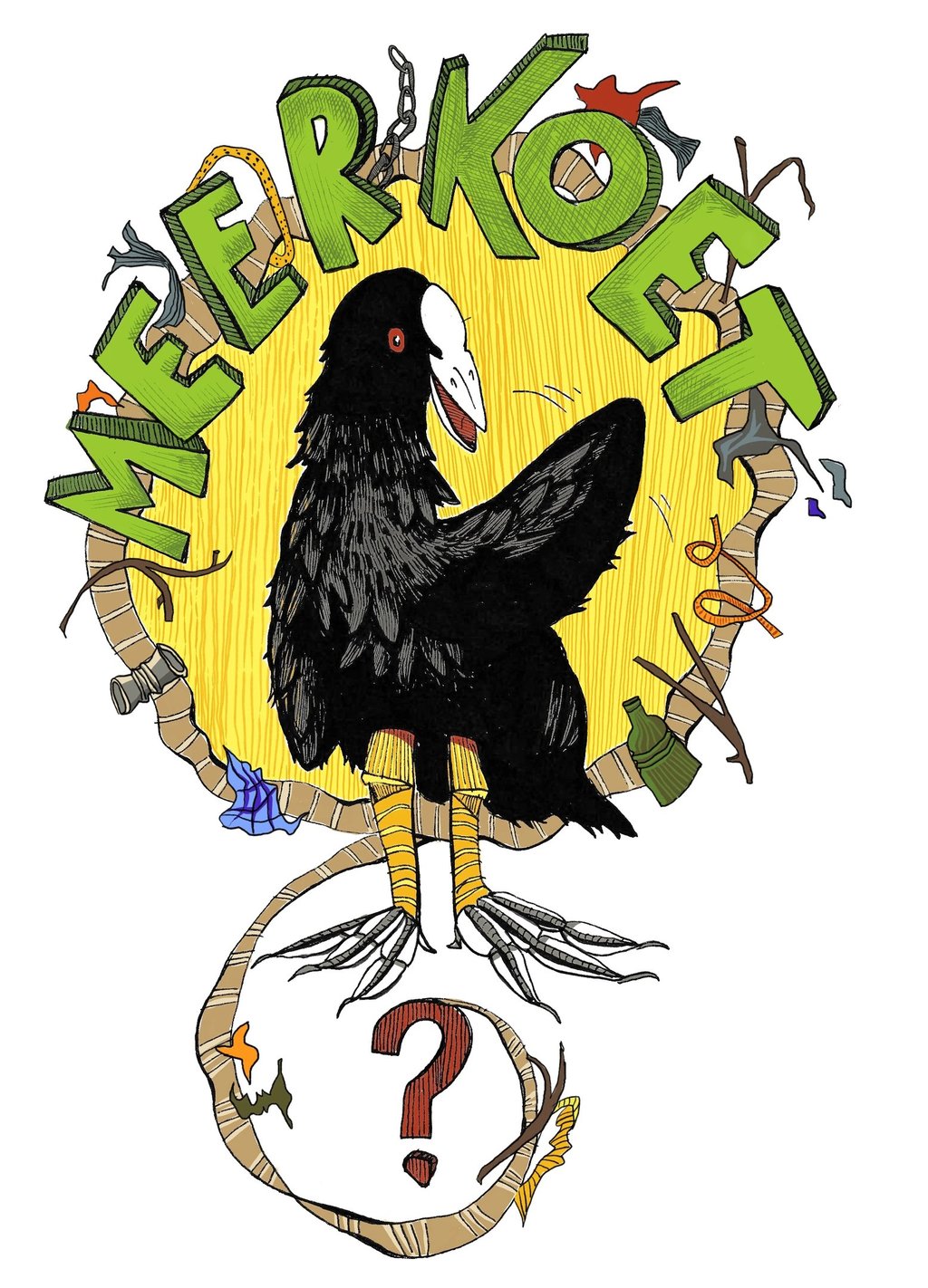
Dit vriendelijke dier is een meerkoet. Het is een watervogel die veel voorkomt op waterwegen in heel België. Meerkoeten zijn te herkennen aan hun witte snavel en het opvallende witte schild op hun voorhoofd. Ze leven op de kanalen van dichtbevolkte stedelijke gebieden en hebben hun aangepast aan het leven in een stad.
Meerkoeten verzamelen afval uit het water om hun nesten mee te bouwen.
Recent onderzoek toont aan
dat maar liefst 29,3% van het nestmateriaal van stedelijke meerkoeten bestaat uit kunstmatige materialen (1.634 van de 5.579 geregistreerde items). Sommige nesten bevatten zelfs meer plastic dan natuurlijke materialen! (Hiemstra, Gravendeel, Schilthuizen: 2021)
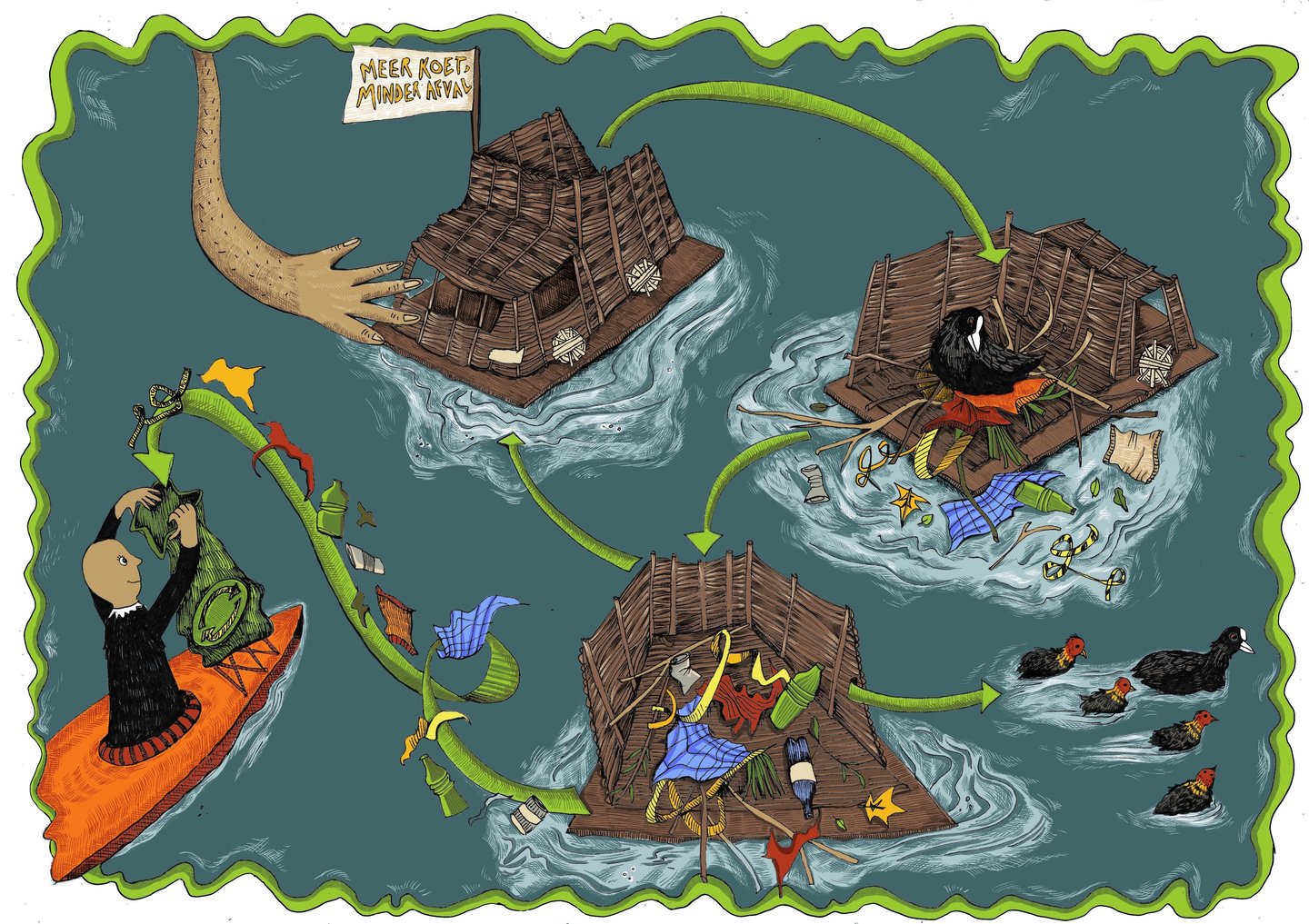










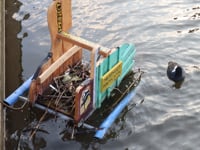
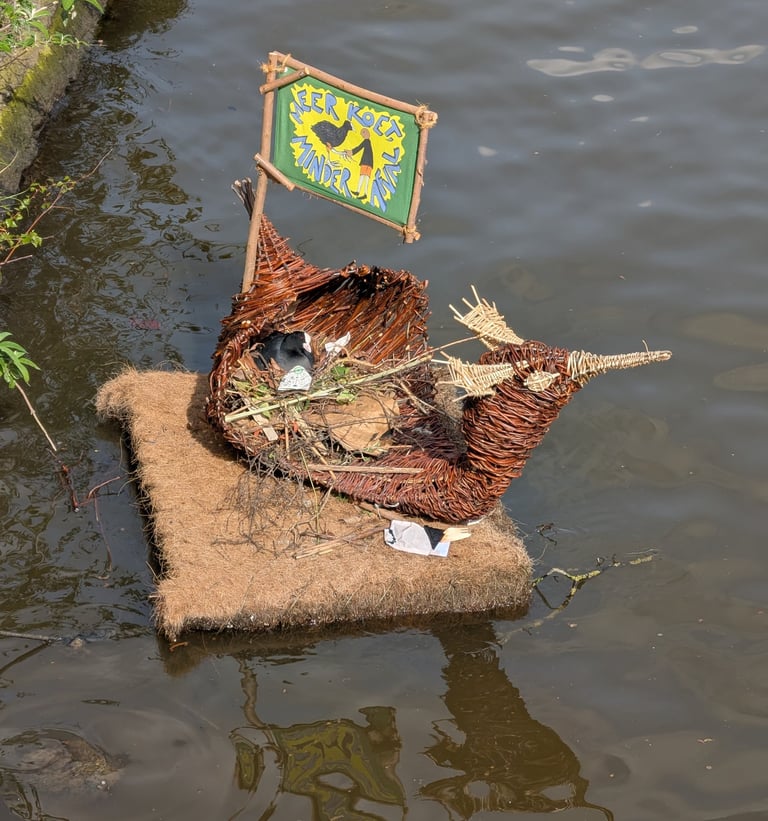
In het vroege voorjaar plaatsen we nestplatformen op het water.
In toeristische steden (zoals Gent) is er vaak een tekort aan veilige broedplaatsen voor watervogels.
Watervogels, zoals de meerkoet, nemen het platform in gebruik en beginnen met het bouwen van hun nest.
Tijdens het bouwen verzamelen ze ook steeds meer menselijk afval uit de grachten en verwerken dat in hun nesten.
Na het broedseizoen, wanneer de kuikens volgroeid zijn, hebben de vogels hun afvalnesten niet meer nodig.
De nesten vol met menselijk afval worden verzameld en het afval wordt gesorteerd en gerecycled.



contact
jaron.vandevelde@telenet.be
meer.koet.minder.afval
Met dank aan